Pluggable Amplifiers: Extending Your Network’s Reach
Posted by Lakeisha Turks on Jun 23, 2026
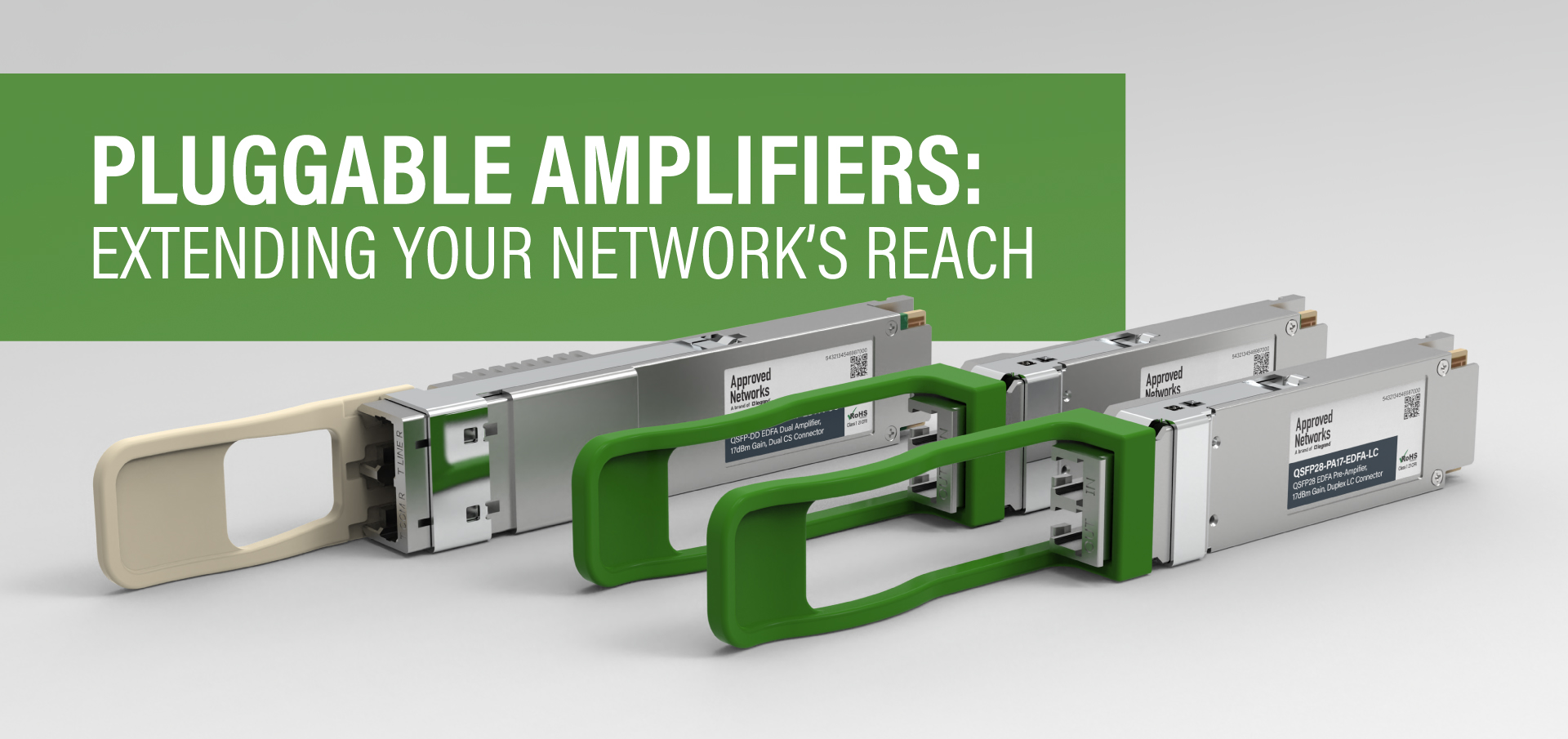
As networks push toward higher speeds and longer distances, a familiar tradeoff keeps resurfacing: the farther data needs to travel, the more complex and expensive the infrastructure becomes.
Optical signals naturally weaken over distance. Traditionally, extending reach meant introducing dedicated amplifier chassis that require large, power-hungry systems, adding cost, consuming rack space, and increasing operational complexity. In practice, going farther hasn’t just required more fiber; it’s required more infrastructure.
For years, that tradeoff has been accepted as the cost of doing business in long-haul and extended-reach networks. But that assumption is starting to break.
A Different Approach to Amplification
Pluggable erbium-doped fiber amplifier (EDFA) technology changes how amplification is deployed and just as important, where it lives in the network.
Instead of relying on standalone amplifier systems, pluggable EDFAs integrate amplification directly into standard transceiver form factors. They amplify optical signals in-line, without converting them to electrical signals, and slot directly into existing switch or router ports.
The impact is immediate:
- No additional rack-mounted amplifier systems
- No specialized transport layer required
- No increase in power or space footprint
What was once a separate layer of infrastructure becomes part of the optics themselves. In dense wavelength division multiplexing (DWDM) environments, where scaling capacity and reach has traditionally meant increasing complexity, this shift fundamentally changes how networks scale.
From Concept to Deployment: Three Roles, One Architecture
Approved Networks’ pluggable EDFAs are built around how amplification actually functions in a link, not just what the hardware does, but where it fits. Each module is designed to fit seamlessly into standard platforms and support a distinct role in the optical path.
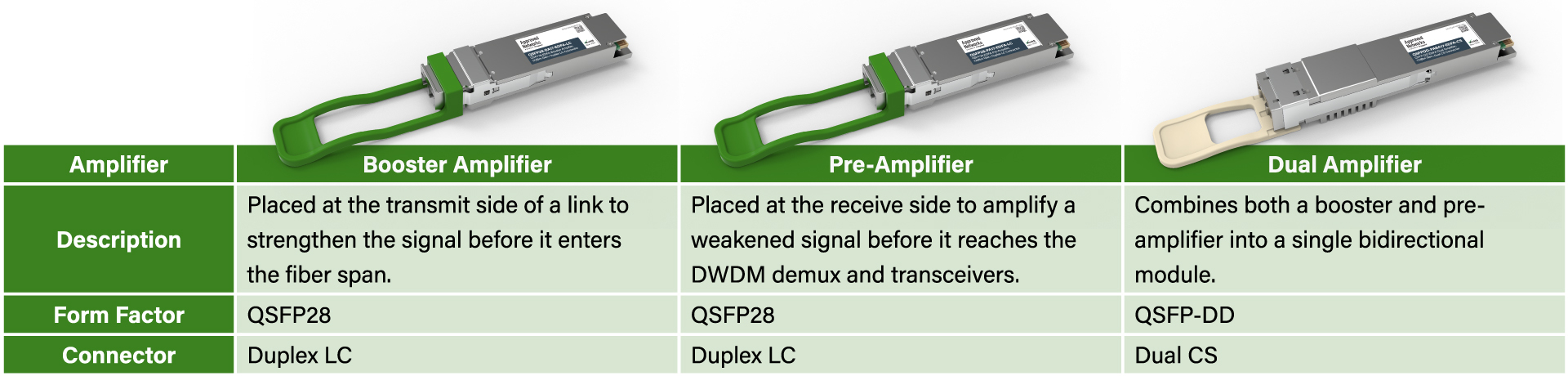
The result is a flexible portfolio that allows amplification to be applied precisely where it’s needed, without redesigning the entire network. Instead of overbuilding or introducing additional layers of infrastructure, operators can fine-tune signal strength at key points in the link, adapting to distance, loss, and performance requirements with far greater control.
Proven in Real-World Architectures
Extended reach claims only matter if they hold up under real network conditions. Approved Networks’ pluggable EDFAs were validated in extended-distance environments using passive DWDM infrastructure and dispersion compensation modules (DCMs). The configurations mirrored the constraints, losses and tradeoffs found in real-world networks.
Figure 1: 10G DWDM over 170km
Eight 10G wavelengths transmitted across 170km using passive mux/demux and DCMs, with booster and pre-amplifiers maintaining signal integrity end-to-end.
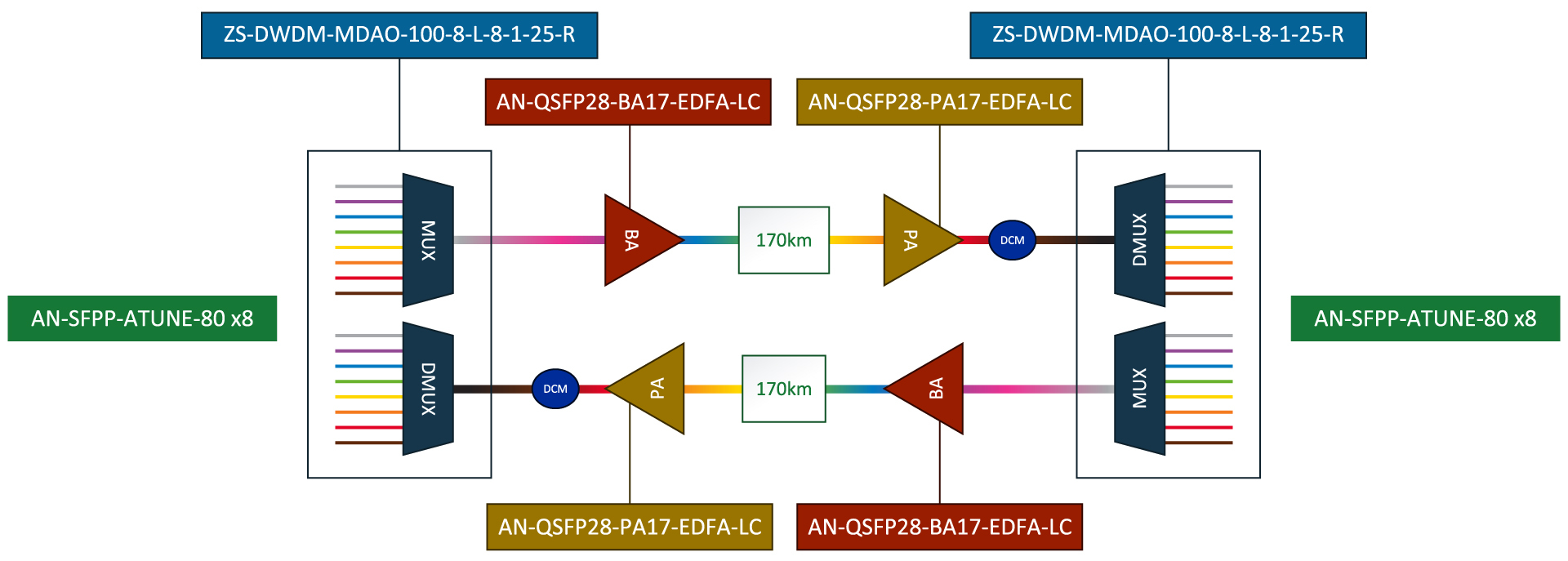
Figure 2: 400G ZR over 170km
The same 170km distance, scaled up to eight 400G coherent wavelengths—demonstrating that higher data rates don’t require a shift back to traditional amplification systems.
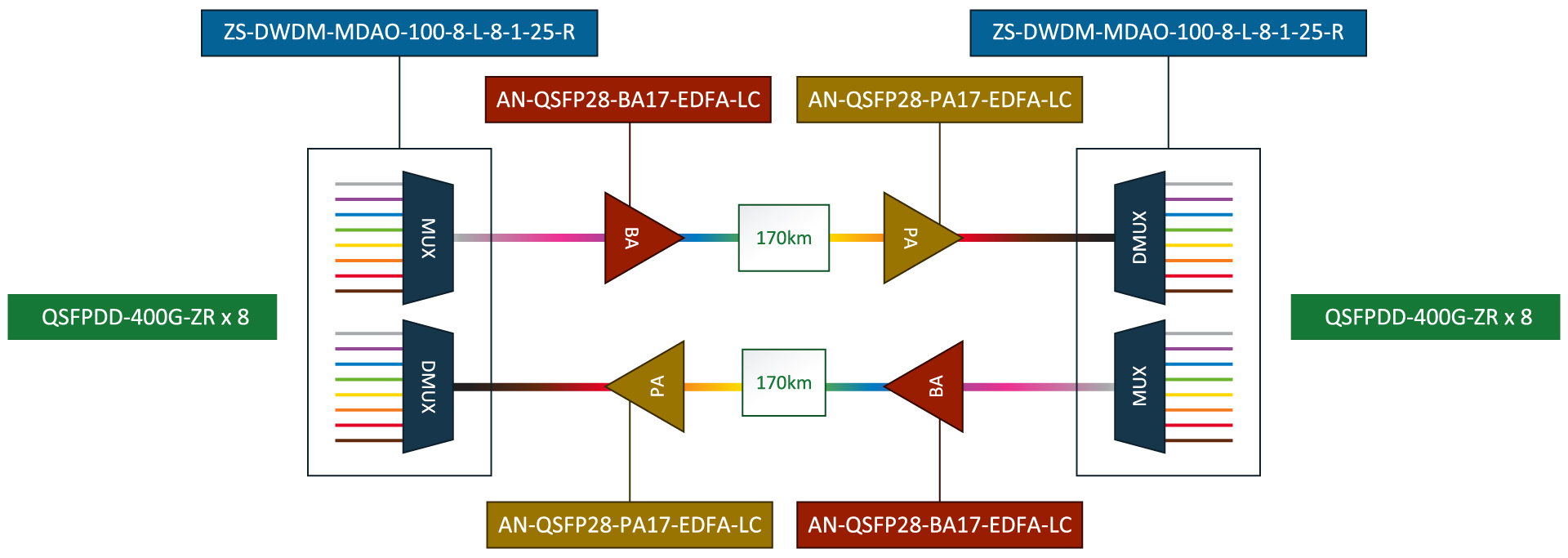
Figure 3: 400G ZR with Dual Amplifier Optimization
A dual amplifier configuration extends reach further while reducing component count, showing how integration can improve both performance and efficiency.
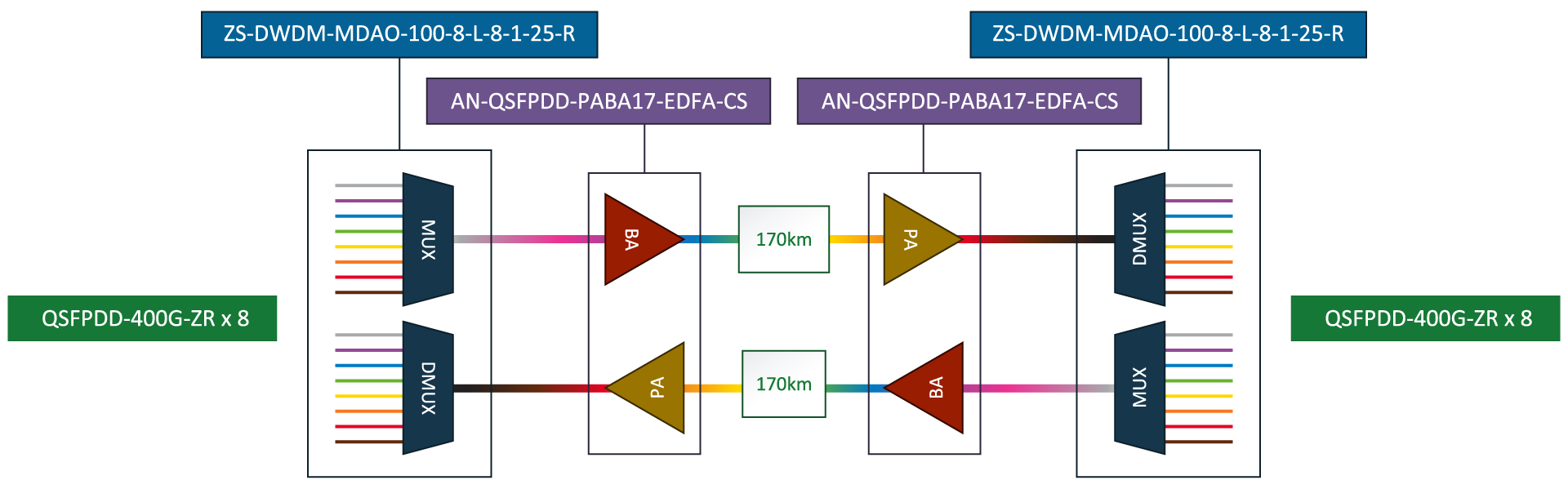
Across all three scenarios, the takeaway is consistent: extended reach no longer requires a separate amplification layer. By integrating amplification directly into pluggable optics, high-capacity DWDM links can maintain performance over extended distances without relying on traditional amplifier chassis, reducing system overhead.
Rethinking How Networks Scale
Pluggable EDFAs represent more than a smaller amplifier, they represent a shift in network design. Instead of building outward with additional systems, networks can scale within the infrastructure already in place. That shift delivers advantages including:
- Lower total cost of deployment
- Simpler architectures with fewer components
- Reduced operational overhead
- Faster time to deploy extended-reach links
These benefits come without sacrificing the performance required for modern, high-capacity workloads.
Extending Reach, Simplifying Everything Else
Whether connecting data centers, expanding metro networks, or supporting next-generation applications, the challenge remains the same: go farther without making the network harder to manage. Pluggable EDFAs offer a way to do that by bringing amplification closer to the optics, and complexity further away from the architecture.
For teams designing IP over DWDM environments or exploring extended-reach strategies, it’s not just a new component—it’s a new way to think about the network itself. Contact Approved Networks for design guidance or to see how pluggable EDFAs can fit into your network.